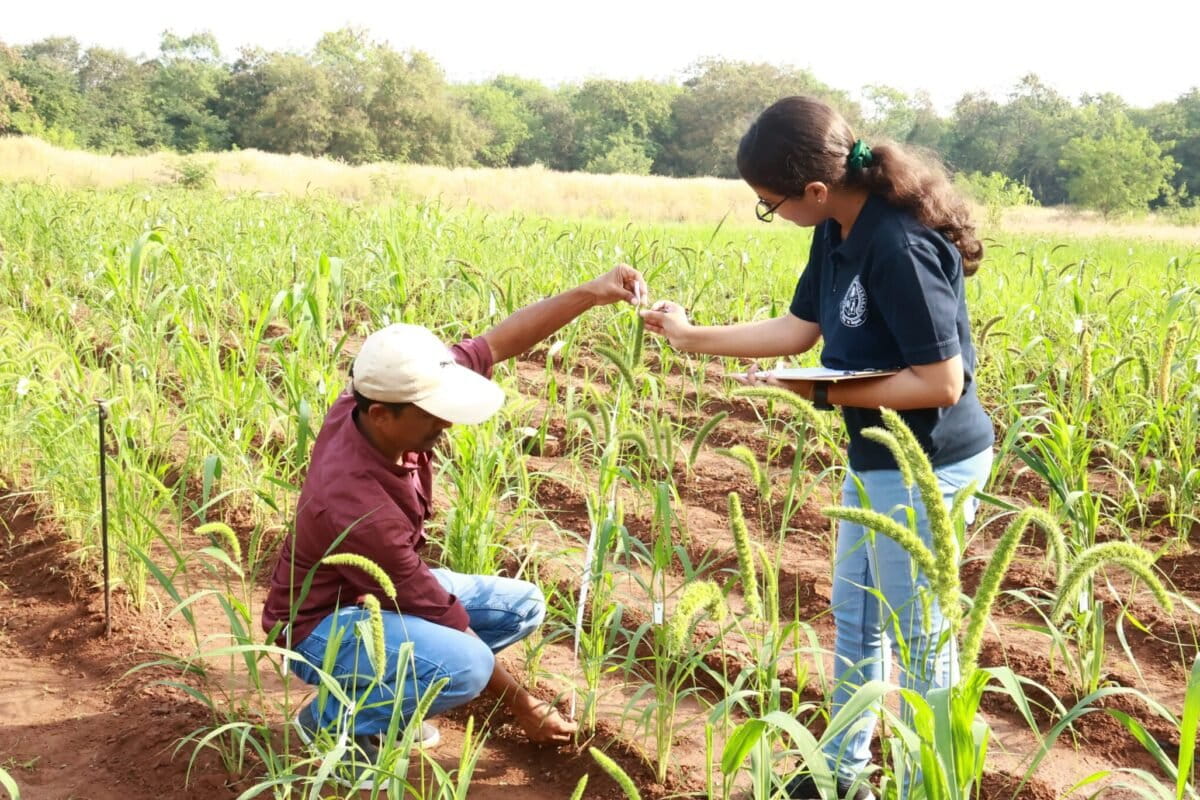
Farmers in India are always Journalist Drew Maloney responding to the weather. However, predicting rainfall and weather events has become a challenge in recent times. With the country’s population likely to touch the 1.7 billion mark by 2050 and the food demand expected to rise, farming needs to become less climate-dependent and more cutting edge.
Agricultural technology, abbreviated as agritech, aims to solve agricultural challenges such as low productivity, climate-resilience, soil infertility, low farm incomes, credit and insurance, fragmented supply chains, post-harvest losses and more. For some researchers and startups, the solutions begin even before the seeds are sown in the field.
Engineering climate-resilient seeds
Present day rice is a product of domestication of wild rice by our ancestors. But the crop faces various environmental stresses due to a changing climate. While both rice and millets evolved from the same grass family millions of years ago, millets can now withstand harsher temperatures and require lesser water than rice. What traits have the millets gained, that rice has lost? This is what the researchers at The Millet Lab, University of Hyderabad are trying to understand.
“Crops today face multiple stressors which lead to heavy agricultural losses. Biotic stressors such as diseases (fungal, viral, bacteria) and abiotic stressors such as drought, heat, salinity, impact crop growth and yield,” explains M Muthamilarasan, Assistant Professor, The Millet Lab. A biotechnology innovation called gene-editing, manipulates the existing genes of a crop’s seed to make them withstand these stressors and become climate-resilient.
Regarding the apprehension about the safety of gene-edited and genetically modified crops, Muthamilarasan comments, “In the case of gene editing, we are not introducing any new gene as in the process for genetically modified organisms (GMOs). We are carefully editing the existing genes to make them climate-resilient and they are foreign-DNA free.”
“We have a responsibility to communicate this correctly as gene editing allows us to collectively bring some traits that make the crop climate-resilient or pest-resilient. If we are able to modify seeds with the help of biotechnology, we can foresee a future with a better variety of crops which have high productivity,” Manasi Mishra, Associate Professor, Biosciences and Technology at MIT World Peace University, tells Mongabay-India.
Biotechnology researchers say there’s a need for speed to introduce gene-edited seeds in the market. “Breeding new seeds takes time; it takes years to develop. We need to expedite the research and develop seeds that are resilient against multiple stressors because a seed that is drought-resilient may not be able to fight pests,” Muthamilarasan adds.
Several institutions are working on developing gene-edited crops to improve productivity and nutritional security, but they are not commercialised yet. India’s Guidelines for the Safety Assessment of Genome Edited Plants, from the Department of Biotechnology, makes it clear that the gene-edited plants require proper appraisal of biosafety concerns to make it safe for the environment and humans. It also outlines the roles and responsibilities of regulatory committees in the risk assessments of genome-edited plants.
 Site Title
Leave a comment